
Work from home: real offers and how not to fall for a scam
On this page · 8

Real work from home is remote or additional work under a contract, or independent earnings, where the employer or the client pays you. Most remote work offers are in office work, IT, customer service and accounting. Ads that ask you to pay for materials or training are almost always a scam.
Work from home is one of the most frequent searches in Lithuania: every month “work from home”, “remote work”, “additional work” and “work at home” are searched for tens of thousands of times. Some people are looking for a real job under a contract, just without the commute to the office. Others want a few hundred euros extra in the evenings. And some fall for ads that promise money for folding bags or “data entry” and ask you to pay something to get started.
This guide helps you tell one from the other: where to look for real remote or additional work, what the Labour Code says, which work-at-home offers are a scam, and what options students, seniors and people with disabilities have.
In short
- Real work from home is work under an employment contract or a clear order, where the employer or client pays you, not you them.
- Most remote work offers are in office work, IT, customer service, accounting and marketing.
- An ad that asks you to pay for materials, training or “registration” is almost always a scam.
- If there is no employer, you can earn from home independently – by selling, providing services or recommending products.
Read in order or pick a topic
- 01
 Next chapterRemote work: where to look and how to get a remote jobRemote work in Lithuania: where to find remote work offers, which fields most often work remotely, what the Labour Code says and how to work for a foreign company.4 min read
 - 02
 Additional work: in the evenings, at weekends and in your free timeAdditional work at home in the evenings or at weekends: where to find additional work offers, how many hours the law allows you to work and how to combine it with your main job.4 min read
 - 03
 Work at home: packing, folding, amber sorting – real or a scam?Work at home as a packer, folding bags, sorting amber or stringing beads: how these ads work, why they are usually a scam and how to tell a real client.4 min read
 - 04
 Work from home without experience: data entry, computer work and online workWork from home without experience: which remote jobs are open to beginners, whether data entry work at home is real, and how to gain your first experience.3 min read
 - 05
 Work at home for seniors and people with disabilities: options and rightsAdditional work at home for seniors and remote work for people with disabilities: which jobs are suitable, whether the pension is paid while you work, and what help the Employment Service provides.3 min read
Work from home, remote work and work at home – what is the difference
In search these words are used as synonyms, but different things stand behind them. It matters that you know what you are looking for, because that determines where to look and what to watch out for.
| What it is | What it looks like | Who pays | Where to look |
|---|---|---|---|
| Remote work | An ordinary job under an employment contract, done from home all or part of the time | The employer, every month | Job boards, company websites, LinkedIn |
| Additional work | A second, part-time job in the evenings or at weekends | The second employer | Job ads with the “part-time” filter |
| Manual work at home | Packing, folding, sorting, sewing at home | The client should pay – but often you are asked to pay | Be careful: most scams are here |
| Independent earnings | Services, selling, affiliate partnerships, content | Clients or sellers | Your own contacts, platforms, affiliate programmes |
Where to look for real remote work
Most remote work offers are in the same place as ordinary jobs – on job boards. Search with the “remote work” or “work from home” filter and always check the employer: name, company code, website, reviews.
- Job boards – the largest number of Lithuanian remote work offers.
- Company career pages – IT, telecommunications, banking and e-commerce companies often advertise remote positions only on their own websites.
- LinkedIn – especially for work for foreign companies in English.
- The Employment Service (Užimtumo tarnyba) – helps you look for work free of charge, and for people with disabilities and older people also through support measures.
More on the search, the contract and working for a foreign company – in the part of the guide on remote work.
What the law says
Remote work in Lithuania is regulated by Article 52 of the Labour Code. You can work remotely at the employee's request or by agreement with the employer. For some groups – pregnant employees, employees who have recently given birth or are breastfeeding, those raising a child under 8, those raising a child under 14 alone or a child with a disability under 18 – the employer must grant the request, unless it objectively justifies that this is impossible because of how the work is organised or disproportionate costs.
When you work in several places, working time limits apply: the standard is 40 hours a week, and including additional work you may not work more than 12 hours a day and 60 hours in seven days. This is covered in the part of the guide on additional work.
How to recognise a fraudulent work-from-home ad
“Work at home” is one of scammers' favourite themes. The scheme is simple: the ad promises easy work and good pay, and then you are asked to pay for a shipment of materials, training, a “starter pack” or insurance. Once you have paid, the parcel never arrives or the work is never paid for.
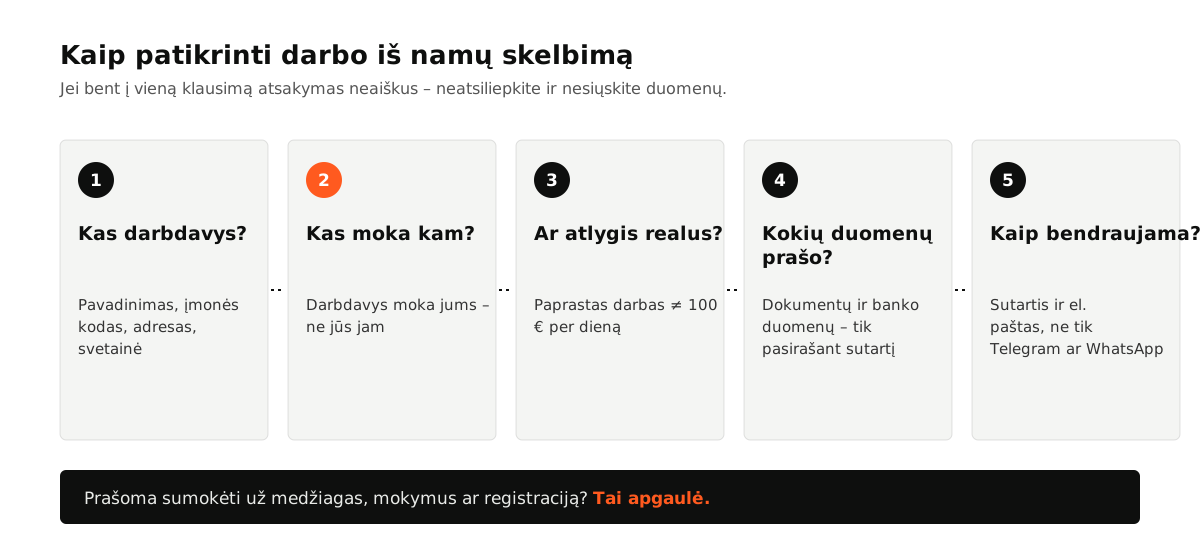
Stop if
- you are asked to pay for materials, training, registration or shipping;
- there is no company name, code or address, and communication is only via Telegram or WhatsApp;
- the pay is unusually high for simple work (“up to 100 € a day folding envelopes”);
- you are asked for a copy of your identity document or bank details even before an interview;
- you are offered to “receive transfers” into your account and forward them on – this is a money laundering scheme.
Which work-at-home offers are real and which are not – in detail in the part of the guide on packing, folding and sorting work.
When there is no employer: earning from home independently
You do not always need an employer. If you have skills or an audience, you can earn from home independently: provide services by video call, sell, create content or recommend products for a commission. Such earnings do not depend on a work schedule, but they do not guarantee a steady salary either. You can handle bookings and payment for your services through mr.lt, and product recommendations through track.lt affiliate programmes.
All the ways of earning online independently are in the main track.lt guide on earning money online. If the activity becomes regular, it has to be made official: which form suits you is explained in the ACS.lt article “Self-employment: registration certificate or business certificate”.
Where to start: a plan for the week
- Decide what you are looking for: a main job done remotely, additional work or independent earnings.
- Update your CV and state clearly that you are looking for remote or part-time work.
- Subscribe to searches on job boards with the “remote work” filter.
- Check every ad against the five questions above – before sending any personal data.
- While you search, try one way of earning independently, so that your income does not start from zero.
Frequently asked questions
How do I find real work from home?
Search job boards with the “remote work” filter, company career pages and LinkedIn. Always check the employer's name, company code and reviews.
Is work at home packing or folding real?
Usually not. If the ad asks you to pay for materials, a shipment or training, it is a scam. A real client supplies the materials and pays for the work done.
Does an employer have to allow work from home?
Usually not – it is a matter of agreement. However, the employer must grant the request of pregnant employees, those raising a child under 8 and some other employees, unless it objectively justifies that this is impossible.
How many hours can I work if I have an additional job?
Including additional work, you may not work more than 12 hours a day and 60 hours in seven days.
Where can I look for work from home without experience?
Beginners are usually suited to customer service, data handling, administration and sales. While you search, you can try independent earnings – services or affiliate partnerships.
Sources
- Valstybinė darbo inspekcija. Tėvų teisė dirbti nuotoliniu būdu galioja ir privačiame sektoriuje
https://vdi.lrv.lt/lt/naujienos/vdi-tevu-teise-dirbti-nuotoliniu-budu-galioja-ir-privaciame-sektoriuje-cB8/ - Valstybinė darbo inspekcija. Maksimalus darbo laikas ir minimalus poilsio laikas
https://vdi.lrv.lt/lt/darbo-teise/darbdaviams/maksimalus-darbo-laikas-ir-minimalus-poilsio-laikas/ - Lietuvos bankas. Investavimas: kaip atpažinti sukčius
https://www.lb.lt/lt/investavimas-kaip-atpazinti-sukcius - Užimtumo tarnyba. Turiu negalią
https://uzt.lt/darbo-ieskantiems/turiu-negalia