
Influencer (nuomonės formuotojas): what it is, how much they earn and how to become one
On this page · 9

An influencer – in Lithuanian, nuomonės formuotojas or influenceris – is a person whose recommendations on social media are trusted by their followers. They earn from sponsored posts, affiliate commissions, platform payouts and their own products. Advertising and gifts must be clearly labelled, and goods received as remuneration are taxed as income.
An influencer – in Lithuanian, nuomonės formuotojas or influenceris – is a person whose recommendations on social media are trusted by their followers. In Lithuania, “nuomonės formuotojas” is searched for thousands of times every month, “influenceris” and “influenceriai” – hundreds of times. Some people want to understand what kind of profession this is, others – how to become one and how much can be earned from it.
This guide is about an influencer's work in Lithuania without illusions: how the earnings work, how an influencer differs from a UGC creator, how to label advertising correctly and which taxes apply even to gifts received.
In short
- An influencer earns from sponsored posts, affiliate commissions, platform payouts and their own products.
- For brands, a clear topic and an active audience often matter more than the number of followers.
- Advertising and gifts must be clearly labelled – the State Consumer Rights Protection Service (VVTAT) reminds influencers of this.
- Gifts and goods received as remuneration for advertising are treated as income by the State Tax Inspectorate (VMI).
Read in order or pick a topic
- 01
 Next chapterHow to become an influencer: from choosing a topic to your first collaborationsHow to become an influencer in Lithuania: how to choose a topic and a platform, grow an audience, put together a media kit and get your first collaborations.3 min read
 - 02
 How much influencers earn in Lithuania and what their price depends onHow much influencers earn in Lithuania: how influencer rates are calculated, what the remuneration depends on and why the number of followers is not the only indicator.3 min read
 - 03
 UGC creator: what it is and how to earn by creating content for brandsWhat UGC and a UGC creator are, how a UGC creator differs from an influencer, how to build a portfolio, find clients and what the contract must cover regarding content rights.3 min read
 - 04
 Ad labelling on social media: what VVTAT requiresHow influencers should label advertising, gifts and discount codes on Instagram, TikTok and other networks under VVTAT guidelines, and when labelling is not required.3 min read
 - 05
 Influencer taxes: gifts, barter, VAT and the form of activityWhich taxes influencers pay in Lithuania: how gifts and barter are taxed, when you have to register as a VAT payer and which expenses can be deducted.3 min read
What an influencer is
An influencer is a person who regularly creates content on a particular topic on social media, a blog or a channel and has an audience that listens to their recommendations. The Lithuanian word “influenceris” comes from the English influence – “to have an effect on”. Both words are used in Lithuanian.
An influencer's most important asset is trust. Followers buy not because they see an advertisement but because they trust the person showing it. That is why lost trust – because of unlabelled advertising or dishonest recommendations – costs more than any single order.
Influencer tiers
In marketing, influencers are often grouped by the number of followers. The boundaries are approximate, and in the Lithuanian market they are lower than worldwide, but the grouping helps to understand how collaborations differ.
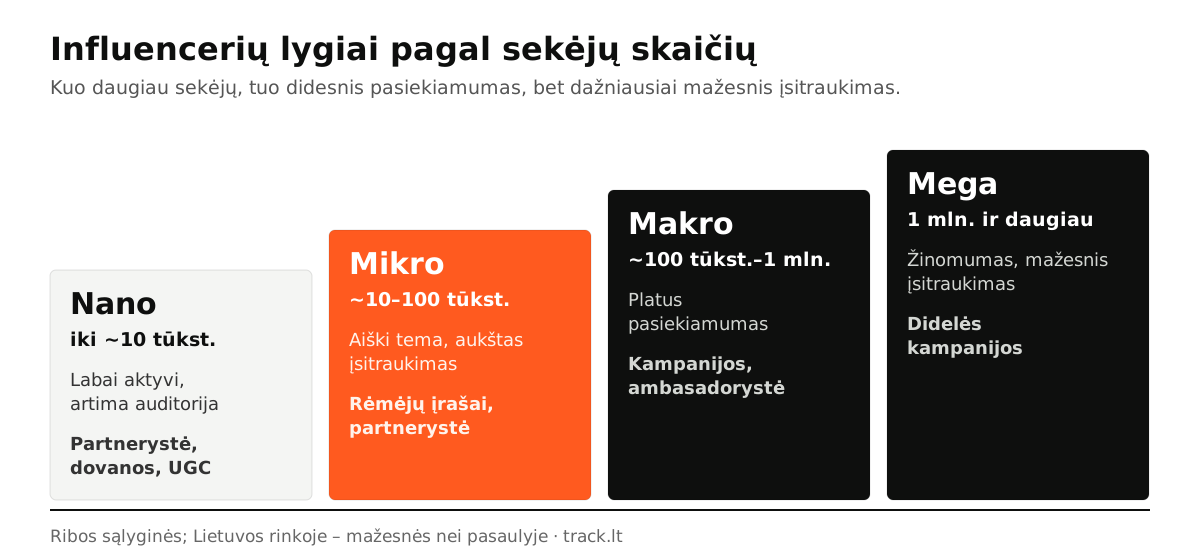
Smaller accounts usually have a more active and more engaged audience, so brands increasingly choose several micro influencers instead of one big one.
How influencers earn
| Method | How it works | When it becomes possible |
|---|---|---|
| Sponsored posts | A brand pays for a post, a story or a video | When the audience is active and the topic is clear |
| Affiliate marketing | A commission for every sale through your link or code | From day one |
| Platform payouts | A share of advertising revenue or creator funds | Once the platform's requirements are met |
| UGC content | You create content for a brand, which it publishes on its own channels | Does not depend on the number of followers |
| Own products and services | Courses, consultations, goods, events | When the audience trusts you |
For beginners, the most realistic place to start is affiliate marketing: it requires neither contracts with brands nor thousands of followers. Every track.lt product comes with ready-made post texts for different networks and an earnings calculator.
Influencer and UGC creator – what is the difference
A UGC creator makes content for a brand, but it is published not on the creator's own account – the brand publishes it in its own ads and on its own channels. That is why a UGC creator does not need a large audience: the payment is for the content, not for the reach. It is one of the fastest-growing ways to start earning from content creation – more in the part of the guide about UGC.
Ad labelling
VVTAT reminds influencers that advertising on social media must be clearly labelled – even if it was not paid for in money and a product or service was received instead. The labels “Reklama” (advertisement), “Dovana” (gift) or “Nuolaidų kodai” (discount codes) must be visible, placed before other hashtags and not covered by the platform's buttons. The most common mistakes are unlabelled Stories and advertising of products the influencer sells themselves. In detail – in the part of the guide about ad labelling.
Taxes
An influencer's ongoing activity is either self-employment (individuali veikla) or activity through a company. VMI states that goods or services received as remuneration for advertising are considered income in kind and are taxed in the same way as remuneration in money. How to declare it and which expenses can be deducted – in the part of the guide about influencer taxes.
Is it worth becoming an influencer
It is worth it if you enjoy creating content on a particular topic and are prepared to do it consistently for months on end with no guaranteed result. It is not worth it if you expect quick money: for most influencers, the first more serious collaborations appear only after a long period of consistent work.
Frequently asked questions
What is an influencer?
A person who regularly creates content on a particular topic and has an audience that trusts their recommendations. In Lithuanian – nuomonės formuotojas or influenceris.
How many followers do you need to be an influencer?
There is no specific threshold. Brands increasingly work with nano and micro influencers too, as long as their audience is active and their topic is clear.
Do gifts you receive have to be labelled?
Yes. VVTAT reminds influencers that followers must be informed about a gift received, and the label must be clearly visible.
Do influencers pay tax on gifts?
Goods or services received as remuneration for advertising are treated by VMI as income in kind and are taxed as self-employment income.
What is the difference between an influencer and a UGC creator?
An influencer publishes content to their own audience, while a UGC creator makes content that the brand publishes on its own channels. A UGC creator does not need a large audience.
Sources
- Valstybinė vartotojų teisių apsaugos tarnyba. VVTAT primena, kaip „influenceriai“ turi žymėti reklamą socialiniuose tinkluose
https://vvtat.lrv.lt/lt/naujienos-ir-pranesimai-ziniasklaidai-377/vvtat-primena-kaip-influenceriai-turi-zymeti-reklama-socialiniuose-tinkluose-1692/ - Valstybinė mokesčių inspekcija. Mokestinės prievolės, susijusios su influencerių (nuomonės formuotojų) veikla
https://www.vmi.lt/evmi/mokestines-prievoles-susijusios-su-influenceriu-nuomones-formuotoju-veikla - YouTube. YouTube Partner Program overview & eligibility
https://support.google.com/youtube/answer/72851